

Journaling is Self-Care
The act of journaling has more positive effects than you may think. Not only does the practice of writing things down rather than typing increase your retention of information, but it also has an abundance of benefits to your mental health.
May is Mental Health Awareness Month. It feels, in our modern age of increased stress, exposure to world events, and addiction to our screens, that every brand is coming out with wellness tips (and products) to soothe our minds. In reality, taking care of your mental health does not have to be complicated. In fact, it does not have to be more complicated than a journal, a pen, and a quiet moment every day.
Listen to the Professionals
According to Sanford Health, writing things down helps you make sense of what is going on in your life. Journaling has been proven to decrease stress and symptoms of depression, help with emotional processing, and even lower your blood pressure.
While some professionals recommend keeping a gratitude journal, where you write three good things that happened to you that day so you can be reminded of all the good, rather than framing your mind to always think about the bad, there is another method that may change the way you look at journaling. Some of us may feel silly keeping a gratitude journal, which is why Arthur C. Brooks, PhD., in his book, The Meaning of Your Life, recommends keeping a journal of failures and disappointments instead. Brooks recommends writing down whatever problem is plaguing your mind and leaving a couple of lines underneath the entry for you to revisit in one month and two months. Not only will this initially get the negativity out of your mind and on the page, but returning every few months to write an update on the event will show you how the problem that was once taking up all your mental energy has since been overcome. Brooks recommends this practice as a way to remind you how strong you are, and to remind you what feels like a catastrophe in the moment, which inevitably leads to increased stress and anxiety, is most likely a minor obstacle in the grand scheme of your life.
Journaling is not just about problem-solving or grand realizations. The practice can simply be an act of showing up for yourself. The University of Rochester Medicine describes journaling as an act of self-care. They recommend pairing journaling with relaxation/meditation, eating a healthy diet, exercise, and good sleep. This is what Mental Health Awareness is all about: arranging all the pieces of the puzzle to improve your life. They recommend looking at journaling as your personal relaxation time, to wind down, possibly with a cup of tea.
Handwriting vs. Typing
On that note, you may be wondering – why do I have to use a pen and paper? Can’t I type my thoughts in my notes app?
As the above source mentions, this is a time of relaxation. Our phones keep us connected not just to our loved ones, but the entire world, at all times. Shutting off the onslaught of information (and giving our eyes a break) for a moment is not a bad thing, especially considering the role our screens play in our mental health. And when you write by hand, your brain is activated in a different way. According to a 2025 paper published by the National Library of Medicine, “handwriting activates a broader network of brain regions, involved in motor, sensory, and cognitive processing. Typing engages fewer neural circuits, resulting in more passive cognitive engagement.” Mental health is dependent on how we choose to take care of our brains, and transitioning from typing to handwriting our thoughts and feelings is a simple way to positively activate our brains.
Time to Journal!
The beautiful thing about journaling is that it will look different for every individual. You can write as much or as little as you’d like, you can focus on any topic you’d like, and you can add drawings or scribbles or anything else that feels right in the moment.
Here are some tips to help you get started with journaling:
1. Pick a journal and pen that you love
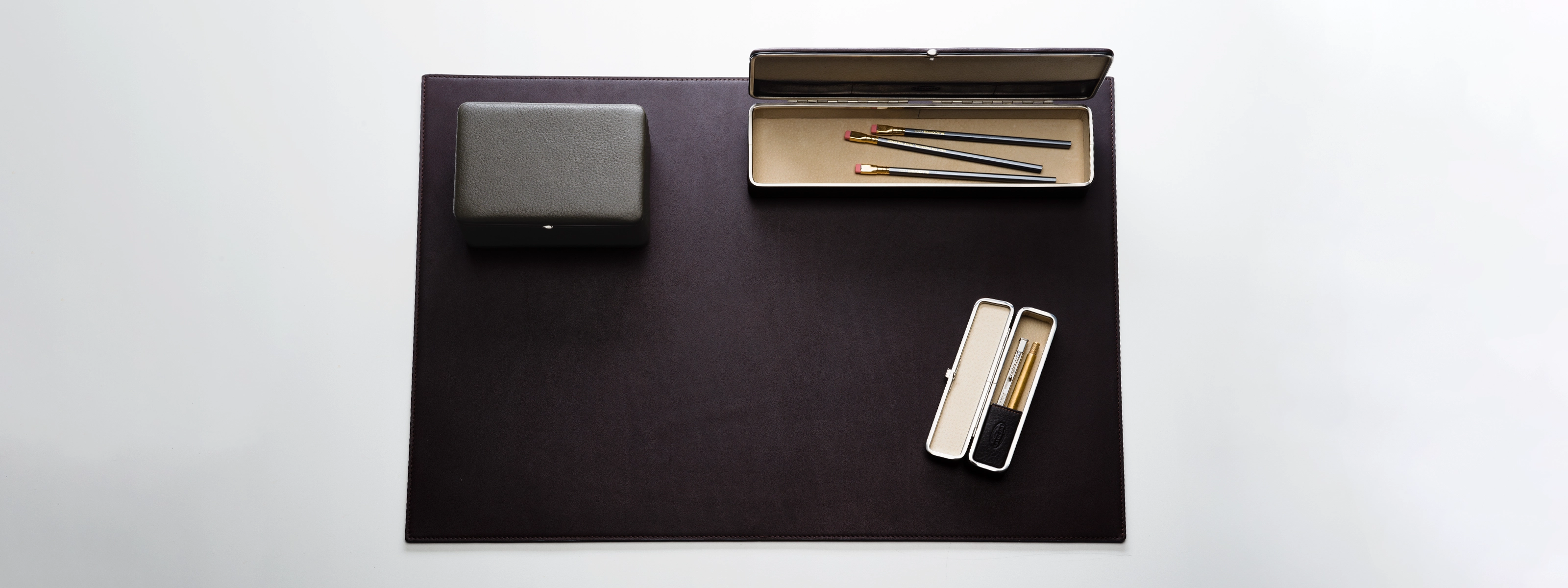
We always tell our customers that you are more likely to reach for a pen that brings you joy. Always go for what makes you happiest, and you will look forward to journaling every day. And nothing quite beats the feeling of the perfect nib running across the perfect sheet of paper.
2. Be consistent and make it a habit
Many people suggest pairing journaling with another daily habit, such as brushing your teeth, your morning coffee, or reading a chapter of a book before you go to bed. Pairing activities tricks your brain into doing it, and it will become natural not long after. As with any mental meditation or wellness act, consistency is key. You will feel results over time.
3. Write whatever you want to write
you can use your journal as a space for gratitude or as a reminder of all you have overcome. You can detail last night’s dreams, your life aspirations, or whatever it may be on your mind. Journaling looks different for everyone, so just do whatever feels right. We recommend starting with a line or two, so it doesn’t seem like a daunting task, and you are able to do it on a consistent basis. Eventually, you may be writing multiple pages!
4. Keep your journal sacred
you don’t have to show anyone your journal, which should take some stress off. Journaling is therapy. You are not writing a best-selling novel that will be judged by the New York Times; you are writing your feelings, which are for you, and only you.
5. Enjoy it
Journaling and taking care of your mental health, are not supposed to be chores. Just as you would eat a balanced diet and exercise regularly, we want to take care of ourselves and our loved ones. We want to be happy and present. Journaling is an amazing first step in your mental health journey.
Journaling is About You
Journaling is not just a trendy hobby; it remains an act that people return to again and again for the cognitive benefits. Whether you write down feelings of gratitude, anguish, or anything in between, journaling is a beneficial and fun habit. This Mental Health Awareness Month, look after yourself.


3 comments
I am just beginning to journal. Very appreciative of your comments on journalling, I am just a neophyte when it comes to this new avenue of fine journaling. LOVE TO SEE MORE ARTICLES ON JOURNALING……
Claude Dufresne
Thank you for this!!!!!!
K. Squires
This was such a wonderful read. I love that you brought up the work of Arthur Brooks, and his suggestion to keep a journal of failures. While not a typical practice we see recommended, as you’ve mentioned the gratitude journal, the journal of failures is intriguing and something I’ve started doing. Thank you for sharing your thoughts!
Matt
Leave a comment
This site is protected by hCaptcha and the hCaptcha Privacy Policy and Terms of Service apply.